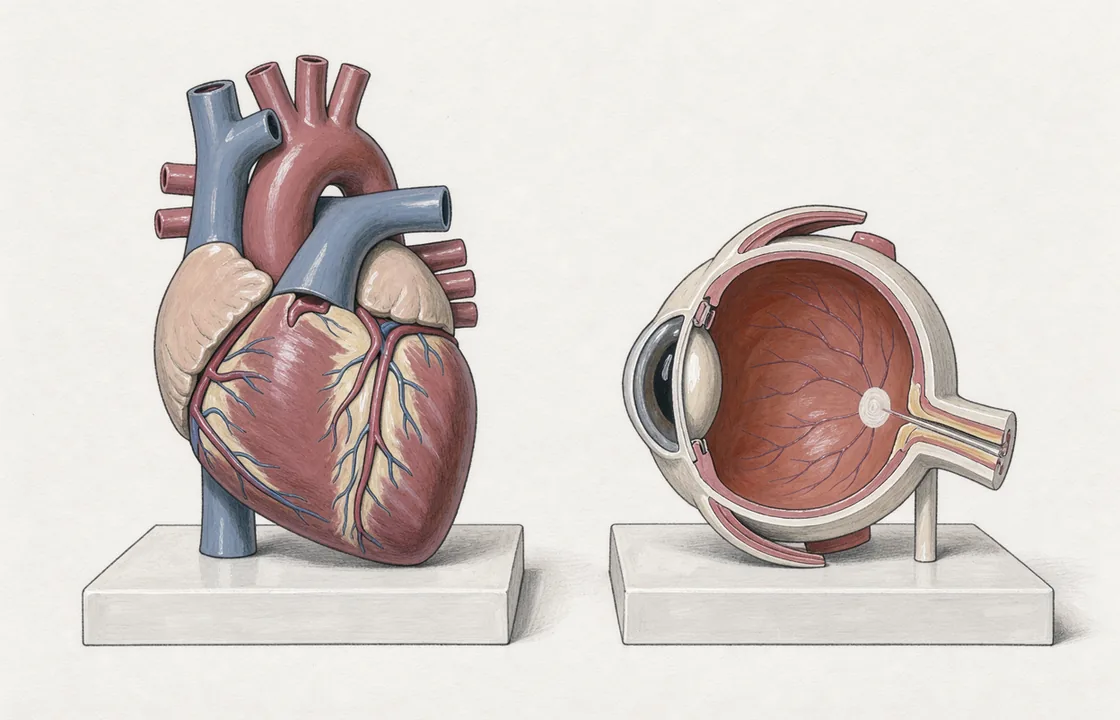
Cardiovascular outcomes
Heart events and eye complications
A favourable heart result is persuasive. A complication elsewhere deserves the same uninterrupted attention.
SELECT cardiovascular outcomes
For people who already have cardiovascular disease, doing well has acquired a different urgency from the adolescent BMI question: avoiding a serious event. That is why SELECT's cardiovascular outcome carries such weight with me. It studied 17,604 adults with preexisting cardiovascular disease and overweight or obesity, without diabetes. The primary outcome combined cardiovascular death, nonfatal myocardial infarction and nonfatal stroke.
Semaglutide reduced that composite versus placebo: hazard ratio 0.80, with a 95% confidence interval of 0.72-0.90. The reported relative risk reduction was 20%. Those figures describe the comparison in this trial population. They give no personal probability for someone whose medical circumstances I know nothing about.
Events this consequential warrant close attention. The symptoms on the opening page remain important to me, but a person's account of an easier day and a trial's record of cardiovascular events answer different questions. Both have a legitimate claim on well.
SUSTAIN-6: diabetes and cardiovascular risk
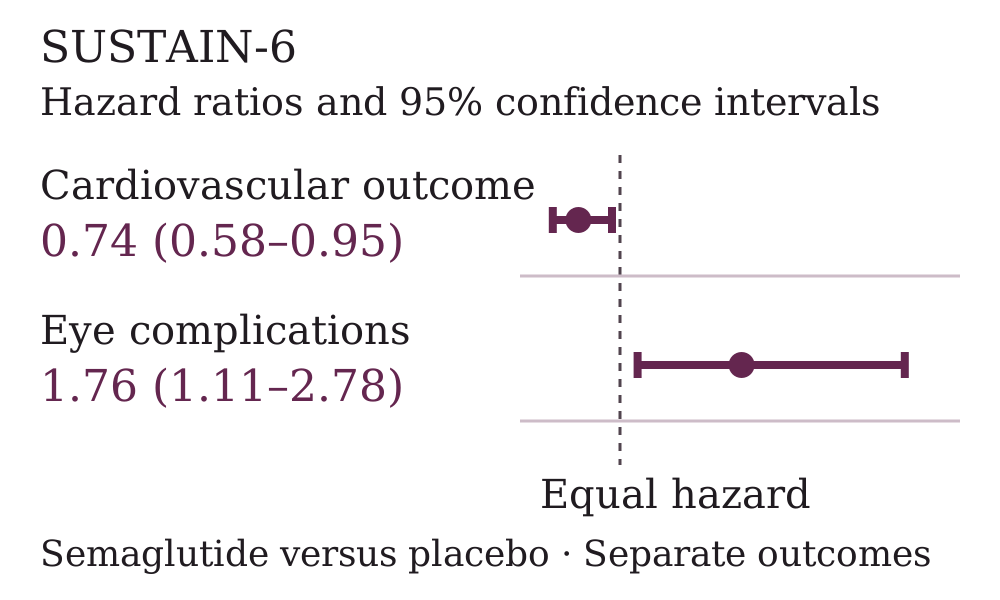
The earlier SUSTAIN-6 trial put cardiovascular benefit and an eye complication in the same record. It enrolled 3,297 people with type 2 diabetes at high cardiovascular risk. For the composite of cardiovascular death, nonfatal myocardial infarction or nonfatal stroke, the hazard ratio was 0.74, with a 95% confidence interval of 0.58-0.95. Diabetic-retinopathy complications were more frequent: hazard ratio 1.76, with a 95% confidence interval of 1.11-2.78.
I resist folding that eye result into a vague sentence about side effects and moving on. The eye deserves to remain visible beside the heart.
The paired estimates below come from this trial. They concern different outcomes, so subtracting them would create a score with no sensible meaning. Their value together is that they prevent a comfortable, one-directional account of the result.
The retina beside the heart
An assessment of semaglutide safety also discusses retinopathy monitoring with rapid glycemic correction. That context puts a glucose-related change and an eye finding in the same conversation; it does not turn the complication into something I can wave away.
The tension ought to survive a closer look. SELECT concerns established cardiovascular disease without diabetes. SUSTAIN-6 concerns type 2 diabetes at high cardiovascular risk. Each result has its own people around it. Reading them together broadens the health question while preserving those differences. The tolerability essay takes up the more immediate experience of adverse effects.